
Jump to

By Gareth Presch, CEO & Founder, WHIS
Last week, I shared a raw reflection on the realities of being a social entrepreneur. The response was overwhelming. I wrote that piece to shine a light on the truth; today, I am writing to move the conversation from pain to reform.
The response confirmed what many of us have quietly known for years: The problem is not the models. The models work. There is a structural market failure in the impact economy.
Proven grassroots models are undercapitalised, underprotected, and structurally disadvantaged. Grassroots innovators are expected to absorb all the personal, financial, and operational risk to demonstrate that solutions work in our communities. What the market systematically fails to price in is the immense volume of unpriced intellectual and relationship capital founders bring to the table: decades of trusted networks, hard-won sector reputation, and thousands of hours of strategic execution.
In my case, this represents over two decades of experience across public, private, and voluntary healthcare settings from the NHS to serving as Chief Officer of the National Haemophilia Council in Ireland witnessing firsthand the severe recruitment issues, staff burnout, and operational pressures that cripple traditional health systems.
Yet, once these models demonstrate clear value, in our case, delivering an independently evaluated Social Return on Investment (SROI) of up to £36 for every £1 invested (compared to the standard £2 to £4 baseline recognized across social prescribing literature, such as Oxford University Press) the institutional architecture stumbles. Funding delays, administrative friction, and uncompensated value extraction leave the people doing the heavy lifting depleted.
We cannot fix the healthcare crisis or build resilient communities if we continue to burn out the very people building the solutions.
Gratitude and sympathy will not change the status quo. Collaborative action will.
To foster a sustainable, high-impact ecosystem that genuinely supports innovators while delivering for communities, we suggest the following framework as a practical basis for co-creating reform:
1. Protected Procurement & Pre-Financing Pathways
The Challenge: Small, agile social enterprises are routinely forced to compete against massive, bureaucratic incumbents or traditional charities that have large grant-writing departments but high overheads and limited grassroots impact. Furthermore, non-binding promises of “confirmed future funding” keep innovators burning personal reserves on standby while delivering free strategy and network access.
Suggested Pathways:
- Direct High-SROI Procurement: We suggest that health authorities and governments explore fast-track, protected procurement channels specifically for validated, high-SROI enterprise models.
- Valuation of Founder Equity & Co-Design: Discovery, network access, and co-design phases should be formally contracted and compensated, recognizing that a founder’s accumulated intellectual and relationship capital represents significant private investment brought to a public challenge.
- Binding Pre-Financing Terms: If an institution or fund publicly announces an initiative or signs an intent framework, legally binding pre-financing commitments should be established to cover baseline operational costs.
2. Safeguarding Intellectual Property & Published Frameworks
The Challenge: Too often, grassroots intellectual property, human capital, and network infrastructure are not adequately protected when larger institutions become involved. Independent founders spend years building frameworks, methodologies, and regional networks—frequently published across peer-reviewed academic literature—only to see larger bodies quietly absorb that intellectual property to secure major grants without fair attribution, compensation, or governance inclusion.
Suggested Safeguards:
- Grassroots IP & Citation Protection: Public grant structures and international health alliances should enforce clear IP protection and attribution standards for social entrepreneurs, formally recognizing published methodologies (such as the WHIS platform model analyzed in Routledge’s Intellectual Capital in the Digital Economy).
- Mandatory Founder Governance: When an established institution scales a framework built by an independent innovator, the original founders should hold protected governance and operational seats to ensure the vision remains intact and value is fairly attributed.
3. Ending Administrative Friction & Perpetual Delay
The Challenge: Protracted administrative cycles shifting micro-deadlines, uncommunicated internal holds, and endless restructuring impose severe financial and operational strain on founders. Institutions absorb delay as a routine process; independent enterprises absorb delay as severe operational disruption.
Suggested Mechanisms:
- Service Level Agreements for Funding Decisions: Funding bodies and foundations should adhere to strict, transparent timelines for capital release, with automatic interim funding mechanisms triggered if institutional delays exceed agreed windows.
- Clear Review Pathways: Accessible, constructive mechanisms for social enterprises to seek review, explanation, and resolution when trapped in operational or funding holds.
4. Creating a Safe Infrastructure for Founders
To sustain this work, founders cannot continue to stand alone in the storm. Moving forward safely requires building a new support architecture around impact leaders:
- Legal & IP Safeguards: Access to independent legal advice to negotiate fair terms, ensure contracts are finalized, and protect grassroots IP.
- Operational Bridge Capital: Micro-equity or bridge facilities designed specifically to protect enterprise core operations during payout delays.
- A Trusted Peer Alliance: Moving away from fragmented competition toward a genuine, protected collective where social entrepreneurs can pool resources, share intelligence, and build shared resilience.
A Proven Model: Moving From “Sick-Care” to Prevention
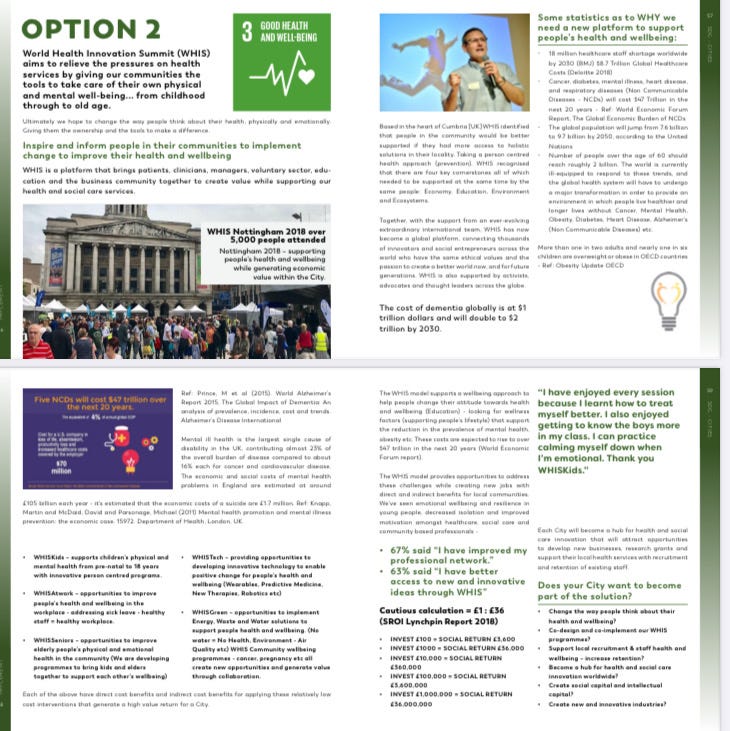
This blueprint is not theoretical. The World Health Innovation Summit (WHIS) was created as a social business to shift healthcare away from a reactive “sick-care” model toward preventative, circular health economies built on human, social, and structural capital.
Operating on a circular economic model where profits are reinvested directly back into local communities, the WHIS platform has codeveloped five core, scalable pillars with local partners:
- WHISKids: School mental health and well-being programs (demonstrating a 20% average increase in children’s emotional understanding).
- WHISatwork: Workplace stress management and workforce resilience.
- WHISSeniors: Combatting loneliness, social isolation, and fall prevention.
- WHISGreen: Environmental health, sustainability, and community resilience.
- WHISTech: Digital health access, social prescribing, and knowledge transfer.
A Shared Agenda for Reform
There are many great people inside foundations, public bodies, and healthcare institutions who want to do this differently. This blueprint is not about blame. It is about creating fairer rules so trust, innovation, and public value can grow.
This is both a WHIS learning and a wider sector issue. The WHIS health models are backed by years of field implementation, independent SROI auditing, and published literature including research in Oxford University Press (Health & Social Work) as well as expert publications on Sustainable Health Solutions and One Health frameworks (all referenced below). The aim is not simply to fund one organisation, but to create fairer conditions for all validated grassroots innovators.
I truly believe that “Trust is the Oil of the Future.” Healthcare desperately needs innovation, energy, and trust. By reforming how we support grassroots models, we can improve health and wellbeing, reduce costs, and create new, meaningful jobs while boosting economic growth.
The Next Step: Co-Creating the Framework
Rather than imposing fixed answers, we offer this blueprint as an open invitation to collaborate. We are now seeking:
- 2 legal or intellectual property advisers to help draft standardized IP protection clauses for grassroots models.
- 3 values-led funders & public sector leaders willing to pilot protected procurement and pre-financing pathways for high-SROI initiatives. If you fit one of these roles and are ready to turn hard-learned lessons into lasting, practical reform, let’s connect and start building.
Academic References & Supporting Literature
- Social Prescribing & Social Determinants of Health: Saleeby, P. W., & Presch, G. (2026). The Power of Social Prescribing in Addressing Social Determinants of Health. Health & Social Work, Oxford University Press, 51(3), 181–183. https://doi.org/10.1093/hsw/hlag031
- Independent SROI Evaluation: LynchPin Support Ltd (Level 3, Charity Reg. 1142874) — Demonstrating up to £36:£1 SROIthrough community reinvestment, compared to the standard £2–£4:£1 baseline in social prescribing literature.
- Knowledge & Intellectual Capital Frameworks: Presch, G., Dal Mas, F., Piccolo, D., Sinik, M., & Cobianchi, L. (2020). The World Health Innovation Summit (WHIS) platform for sustainable development: from the digital economy to knowledge in the healthcare sector. In P. Ordóñez de Pablos & L. Edvinsson (Eds.), Intellectual Capital in the Digital Economy (Ch. 3). Routledge. Taylor & Francis Group
- One Health & Circular Economic Models: Formica, P., & Presch, G. A New Model of Health: The World Health Innovation Summit Platform. In One Health: Transformative Enterprises, Wellbeing and Education (Ch. 6). Emerald Publishing

Older story → How WHISTech Scales Sovereign AI & Preventative Health for 8 Billion People